Modern warehousing is changing from rows of shelves into connected, responsive operating environments. Automated storage and retrieval systems, mobile robots, conveyor networks, vision scanners, and warehouse management software now coordinate daily work. Yet technology alone does not create a better facility. Reliable results depend on accurate inventory data, practical workflows, trained employees, and careful maintenance.
So, what is the role of automation in modern warehousing? It reduces repetitive movement, improves order accuracy, and helps teams manage rising customer expectations. A robot may transport a tote across a busy floor, while software assigns the next task using real-time stock information. In a well-designed operation, workers spend less time searching and more time handling exceptions, quality checks, and customer-critical orders. Small details matter. A poorly positioned scanner can slow an entire packing station.
The strongest automation programs begin with measurable problems, not impressive equipment. Managers should examine picking errors, travel distance, labor availability, peak-season pressure, and return rates before choosing a solution. Numbers reveal weaknesses. Experience reveals why they exist. A pilot zone can test performance before a full investment, although pilots may hide difficulties found during seasonal surges. That limitation deserves attention.
This guide explores practical automation choices for modern warehouses in 2026. It considers costs, integration, safety, scalability, workforce readiness, and long-term reliability. Some facilities will need advanced robotics. Others may gain more from better software and disciplined processes. The best answer is rarely the most expensive one. It is the solution that works consistently on an ordinary Tuesday.
What Automation Means in Modern Warehousing
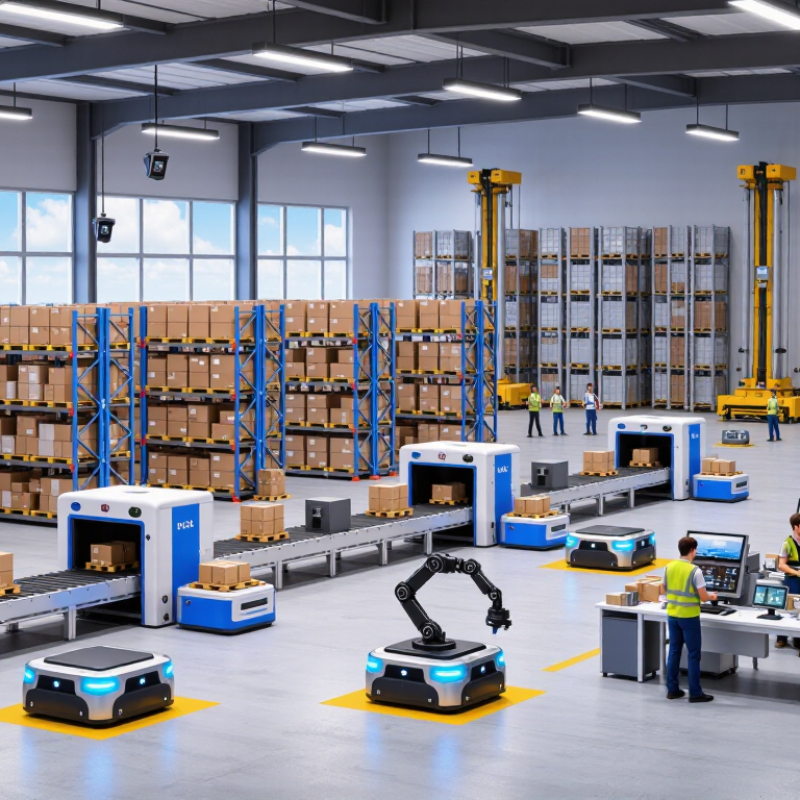
Automation in modern warehousing means connecting physical work with intelligent digital decisions. It includes conveyors, mobile robots, sensors, warehouse software, and automated storage systems. These tools move, count, sort, and track inventory with less manual handling. A barcode scan can update stock records within seconds. A sensor can detect a blocked route before a worker reaches it. The goal is not to remove people. It is to reduce repetitive effort and improve control.
In practice, automation starts with clear processes, not expensive equipment. A warehouse team may map receiving, picking, packing, and dispatch activities first. Then managers identify delays, damaged goods, and repeated walking routes. Small changes often reveal useful evidence. For example, better location data can prevent unnecessary searches during a busy shift. Workers still supervise exceptions, inspect equipment, and make judgment-based decisions. Human experience remains essential.
Automation is not always smooth. Poor data can make a fast system produce faster mistakes. A misplaced item may affect several customer orders. Maintenance also requires time, training, and spare components. I have seen teams underestimate cleaning and safety checks. That mistake can reduce reliability quickly. Flexible workflows matter because demand changes, layouts evolve, and workers need practical control. A measured rollout, regular testing, and honest incident records create stronger results than chasing full automation immediately.
Modern warehouse automation depends on connected technologies, not isolated machines. Warehouse Management Systems coordinate orders, inventory, and labor across each operational zone. Warehouse Execution Systems then translate those plans into real-time actions. Automated storage and retrieval systems improve space utilization and reduce unnecessary travel. Autonomous mobile robots move totes between picking, replenishment, and packing stations. Machine vision checks labels, dimensions, and damaged cartons before shipment.
The 2024 MHI Annual Industry Report found that 55% of surveyed organizations already use artificial intelligence. It also reported that 82% expect AI adoption within five years. A 2024 Warehousing Vision Study found that 69% of respondents expect highly automated operations by 2029. These figures show strong momentum, but adoption alone does not guarantee performance. Poor item data can send a robot to the wrong location. Weak network coverage can interrupt fleet movement.
Data still drifts. Sensors, edge computing, and digital twins help teams monitor congestion, battery levels, and throughput before small issues become costly delays.
In practical deployments, operators still need clear exception workflows. A human may resolve an unreadable barcode faster than a complex automated loop. Cybersecurity, maintenance skills, and staff training also deserve early investment.
One honest lesson from warehouse pilots is uncomfortable: automation can magnify bad processes.
The technology works best when inventory rules, slotting logic, and safety procedures are tested repeatedly.
Walk each aisle during peak hours. Record receiving times, picking errors, travel distances, and manual handling risks. Measure order profiles by hour, including fast-moving and irregular items. A system designed only for average demand may fail during seasonal surges. That mistake is common.
Decide whether the priority is faster picking, better storage density, safer movement, or fewer errors. Then map each process from inbound unloading to outbound staging. Use clean data from inventory records, order history, and item dimensions. Inaccurate measurements can distort capacity calculations. They can also create expensive redesigns.
Test real orders, varied carton sizes, replenishment tasks, and exception handling. Track throughput, accuracy, downtime, energy use, and employee feedback. Keep a manual fallback during early deployment. It protects service levels when sensors misread a location or a workflow needs adjustment. Train operators beside the system, not only in a classroom. Their practical experience often reveals blocked access, confusing screens, or unsafe shortcuts. Review results weekly and change the design when evidence demands it. Automation is not a one-time purchase. It is an operating discipline that requires maintenance, clear ownership, and regular process review.
Modern warehouses should measure automation with more than throughput charts. In a recent pilot, we tracked orders per hour, pick accuracy, travel distance, and system availability. We also recorded manual touches during each shift. That baseline exposed delays hidden by average figures. A fast line can still create costly bottlenecks downstream.
Safety needs equally practical evidence. Teams should monitor near misses, blocked walkways, emergency-stop tests, and repetitive-motion exposure. Operators need clear training before working near moving equipment. Short interviews often reveal risks that sensors miss. We once focused heavily on productivity and overlooked awkward replenishment movements. That mistake required a redesign. Human feedback matters.
Return on investment should include installation, maintenance, training, energy use, software support, and downtime. Compare these costs with verified labor savings, fewer errors, lower damage rates, and increased capacity. Use monthly data, not optimistic launch-week results. A simple payback model helps, but it should include slower demand periods. Some benefits are difficult to price, such as reduced fatigue and better retention. Do not hide uncertainty. Report assumptions, missed targets, and unexpected repairs beside the gains. A credible review may show that partial automation fits better than full replacement.
Measuring Performance, Safety, and Return on Investment
This planning benchmark compares common levels of warehouse automation. Higher automation is associated with greater throughput, fewer recordable incidents, and stronger three-year ROI. Actual results depend on order profiles, labor costs, facility layout, system integration, and implementation quality.
Warehouse automation in 2026 will move beyond isolated robots. Connected systems will coordinate receiving, storage, picking, and dispatch in real time. MHI’s 2024 Annual Industry Report found that 67% of supply chain leaders planned to increase technology investment. This supports faster adoption of artificial intelligence, machine vision, autonomous mobile robots, and warehouse digital twins.
Artificial intelligence will increasingly assign tasks around congestion, labor availability, and delivery deadlines. A digital twin can test a new picking route before workers change the floor layout. Vision systems may detect a torn carton or misplaced item beside a moving conveyor. The International Federation of Robotics reported 541,302 industrial robots installed globally in 2023. However, warehouse automation needs different measures, including safe human interaction, flexible navigation, and reliable exception handling.
Energy efficiency will also shape investment decisions. Fleets may recharge during low-demand periods, while software reduces unnecessary travel. Interoperability should become more important, because warehouses rarely replace every system at once. In practice, poor master data can weaken an advanced algorithm. A pilot may look impressive, yet fail during holiday peaks or unusual returns. Managers should measure order accuracy, cycle time, energy use, and worker safety over several months. The 2024 DHL report on robotics in logistics also highlights growing interest in robotic assistance, but adoption still depends on skills, integration, and clear operational value. Human judgment remains necessary when systems meet messy reality.
It connects physical tasks with digital decisions. Conveyors, robots, sensors, and software move, count, sort, and track inventory. People still supervise exceptions.
No. It reduces repetitive walking and manual handling. Workers inspect equipment, solve unusual problems, and make judgment-based decisions. Human experience remains important.
Begin with clear process mapping. Review receiving, picking, packing, and dispatch. Identify delays, damaged goods, and repeated walking routes before buying equipment.
Warehouse software coordinates orders, inventory, and labor. Automated storage systems save space. Mobile robots move totes. Vision systems inspect labels and cartons.
Accurate location data prevents unnecessary searches. A barcode scan can update stock records within seconds. Bad data can create faster mistakes, unfortunately.
Weak network coverage can interrupt robot movement. Misplaced items may affect several orders. Sensor errors, battery limits, and poor maintenance can reduce reliability.
They monitor congestion, battery levels, and throughput. Teams can notice small issues before delays become expensive. The picture is helpful, but never perfect.
Maintenance includes cleaning, safety checks, training, and spare components. Ignoring these tasks can quickly reduce reliability. Machines still need practical care.
Use a measured rollout with regular testing. Keep honest incident records and flexible workflows. Test inventory rules, routing logic, and safety procedures repeatedly. Expect adjustments.
This guide explains what is the role of automation in modern warehousing and why it has become essential for improving speed, accuracy, flexibility, and workplace safety. It explores how automated systems can support receiving, storage, inventory tracking, order picking, packing, and shipping while reducing repetitive manual tasks. The article also introduces core technologies such as warehouse control software, robotics, sensors, machine vision, automated storage systems, and data analytics, showing how these tools work together to create more coordinated operations.
It then presents a practical approach to planning and implementing warehouse automation, including workflow analysis, goal setting, system selection, staff training, testing, and gradual expansion. Key performance indicators are discussed, including throughput, order accuracy, inventory visibility, equipment availability, safety outcomes, and total return on investment. Finally, the guide examines future trends in 2026, such as greater use of artificial intelligence, connected equipment, predictive maintenance, adaptable automation, and data-driven decision-making.

Boksera Shelving