How to Improve Warehouse Efficiency Without Expansion?

Time:2026-10-29 Author:Amelia
0%

Warehouse expansion can solve a capacity problem, but it also brings higher rent, longer travel paths, and new operating costs. Before adding floor space, managers can examine how existing space and labor are being used. The question is how to improve warehouse efficiency without expansion while keeping safety, accuracy, and service levels intact. Start with observable details: how far pickers walk, where pallets wait, which aisles become congested, and when orders miss their cutoff. Small gains matter. A simple time study and a review of inventory records can reveal bottlenecks that a busy shift may hide.

Practical improvements may include relocating fast-moving items closer to packing stations, setting clearer replenishment rules, and reducing unnecessary touches between receiving and shipping. These changes should be tested in a limited area before being applied across the warehouse. Track measures such as lines picked per labor hour, order accuracy, dock-to-stock time, and congestion incidents; compare results against a reliable baseline. Do not treat a single strong week as proof. Seasonal demand and staffing changes can distort the picture. Technology may help, but only when it addresses a defined problem and staff receive useful training. A layout that looks efficient on paper may frustrate workers in practice. That deserves a second look. The following outline explores practical ways to assess space, improve workflows, and measure whether changes are working—without assuming every warehouse has the same constraints.
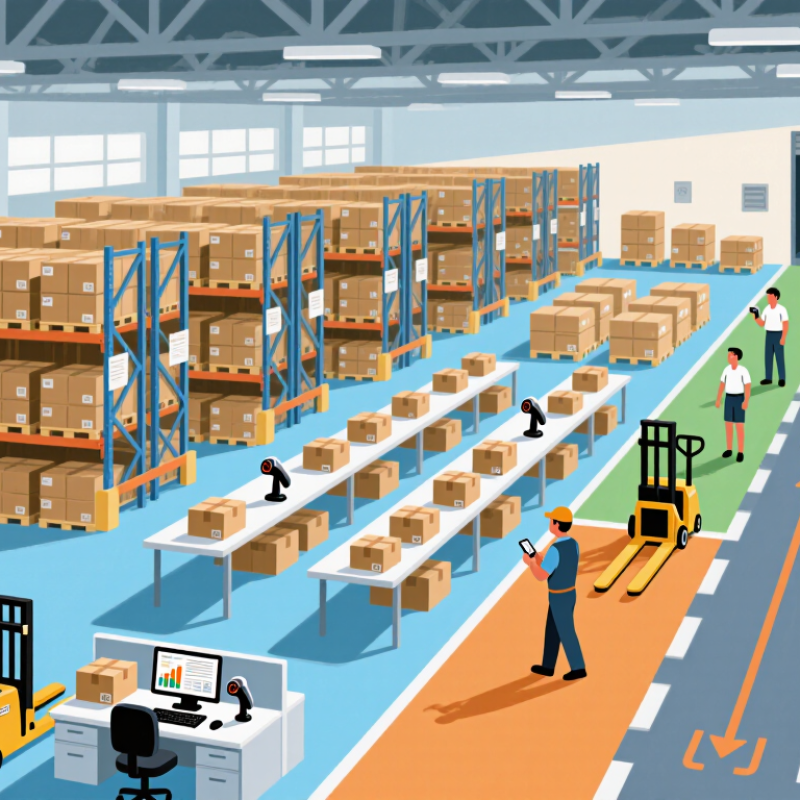
How to Improve Warehouse Efficiency Without Expansion?

Assess Cube Utilization, SKU Velocity, Travel Time, and Order Throughput

Warehouse space can look full while valuable cube remains unused. Measure occupied volume against usable rack and floor capacity, not just pallet positions. A half-empty carton on a high shelf may consume more space than its stock suggests. Walk the aisles and check for blocked locations, awkward overhangs, and products stored far below their safe stacking height. The numbers help, but a tape measure can reveal what a dashboard misses.

Review SKU velocity using actual order lines over a consistent period. Fast movers belong near packing areas, while slow sellers can use less accessible slots. But avoid moving every item after one busy week. Promotions and seasonal demand can distort the picture. I have seen a supposedly slow SKU become a daily pick, so review exceptions with staff before changing locations.

Track travel time from pick release to completed orders, alongside order throughput per shift. A simple route observation can show repeated backtracking between aisles. Compare similar shifts and account for batch size, staffing, and replenishment work. Otherwise, a faster result may be misleading. Small slotting changes can help, though they sometimes create congestion at a shared pick face. Measure again after the change, and ask pickers where the plan feels wrong.

Re-slot Fast Movers with ABC Analysis and Test the 80/20 Assumption

Warehouse space often feels tight because popular items sit too far from packing benches. Use ABC analysis to rank products by actual pick frequency, not just sales value. A fast-moving, low-cost item may deserve a more accessible slot than an expensive product picked twice a month. Review eight to twelve weeks of order data, then check for seasonal spikes and unusual bulk orders. Data can mislead. A promotion or stockout may distort the ranking, so compare the numbers with what floor staff see during a normal shift.

The 80/20 rule is a useful hypothesis, not a warehouse law. Test whether roughly 20% of your SKUs really account for 80% of picks. If the share is different, slot around your own order pattern. Move a small group of high-frequency items closer to dispatch, and record picker travel distance, replenishment trips, and picking errors before and after. For example, moving frequently paired items onto nearby shelves may cut walking, but it can also create congestion at peak times. Small changes matter. Recheck the layout after a few weeks; the first slotting plan may be wrong, especially when demand changes or replenishment access gets overlooked.

Increase Storage Density While Maintaining OSHA’s 18-Inch Sprinkler Clearance

Improving warehouse efficiency does not always require more floor space. Start by measuring the actual clearance beneath each sprinkler deflector. OSHA’s 29 CFR 1910.159(c)(10) sets a minimum 18-inch gap between sprinkler deflectors and stored materials. Local fire codes and system designs may add requirements, so confirm the applicable rules before changing rack heights. Measure it twice.

Then map the highest safe storage levels and reposition fast-moving cartons into easier-to-reach locations. Raising a beam can add capacity, but only if the new load, rack condition, and sprinkler coverage are checked by qualified professionals. Keep the clearance visible during daily work: floor markings or simple rack signs can help crews spot boxes that creep upward. A tidy drawing can still mislead. Recheck the aisle and the actual sprinkler head.

Technology can support these checks, but it does not replace them. The 2024 MHI Annual Industry Report found that 55% of surveyed supply-chain professionals planned to increase technology investment. A basic inventory or slotting system can reveal empty vertical space and misplaced stock. Track usable pallet positions, picking time, and blocked sprinkler gaps before and after changes. Small gains matter. Yet one overlooked carton can erase the benefit—and create a serious safety concern.

How to Improve Warehouse Efficiency Without Expansion? — Increase Storage Density While Maintaining OSHA’s 18-Inch Sprinkler Clearance
Planning Dimension Reference Value or Calculation How to Improve Storage Efficiency Safety and Design Check
Sprinkler-to-storage clearance At least 18 inches between sprinkler deflectors and the top of storage under OSHA 29 CFR 1910.159(c)(10)(iii). Treat this clearance as unavailable storage space when setting the maximum load height and rack configuration. OSHA notes an exception where another standard permits less. Confirm the applicable sprinkler system requirements, fire code, and local authority requirements before changing storage height.
Illustrative vertical storage envelope If sprinkler deflectors are 20 feet above the floor, subtracting 18 inches gives an illustrative maximum storage top of 18.5 feet. Measure the actual deflector elevation, then plan rack levels and load heights below the required clearance. This is an arithmetic example, not a recommended rack height. Measure to the sprinkler deflectors and account for uneven floors, load variation, and applicable fire-protection requirements.
Common pallet footprint A 48 × 40-inch pallet has a footprint of about 13.33 square feet. Use actual pallet and load dimensions to compare rack layouts, bay widths, and storage positions. Minimize unused gaps while allowing safe handling. 48 × 40 inches is a common pallet size, not a universal requirement. Confirm pallet dimensions, load overhang, weight, and condition at the site.
Rack depth and pallet orientation Determine rack depth from the pallet’s actual entry dimension, load dimensions, and required front and back clearances. Review pallet orientation and rack layout together; a suitable orientation can use floor space more effectively without increasing building area. Have a qualified rack designer verify clearances, beam capacity, load placement, and rack configuration. Do not allow loads to obstruct sprinklers or aisles.
Operating aisle width There is no single aisle width suitable for every warehouse or lift truck. Evaluate narrow-aisle layouts only after checking the selected truck’s operating requirements and the facility’s turning conditions. Use the truck manufacturer’s specifications and consider load size, turning radius, pedestrian routes, egress, and applicable requirements. Keep required access and exit routes clear.
Rack level spacing Set each level using the loaded pallet height, handling clearance, and the actual vertical storage envelope. Measure representative loads and adjust beam positions to reduce unused vertical gaps while keeping every stored load below the permitted storage limit. Check rack capacity and stability after configuration changes. Do not move beams or alter rack components outside the rack manufacturer’s design limits.
Storage density versus selectivity Denser layouts can reduce direct access to individual pallets; the trade-off depends on the rack system and inventory mix. Match the layout to SKU count, inventory turnover, and picking needs. Reserve accessible positions for frequently picked or time-sensitive inventory. Review fire-protection compatibility, access for inspection and maintenance, and safe equipment operation before adopting a denser storage method.
Planning note: The figures above are reference values and a clearly labeled calculation example, not a site-specific design. Confirm current OSHA requirements, applicable fire codes, sprinkler-system criteria, rack specifications, and lift-truck requirements before making changes.

Standardize Picking and Replenishment with WERC Warehouse Performance Metrics

WERC Warehouse Performance Metrics give warehouse teams a shared way to assess picking and replenishment. Track measures such as lines picked per labor hour, order-picking accuracy, and replenishment response time. Define each measure clearly. For example, decide whether a picked line counts when it is scanned or packed. Consistent definitions make comparisons more useful than impressive-looking numbers.

Use the results to find specific friction. If picking rates fall during the afternoon, check whether fast-moving items are still near packing stations. If replenishment arrives after a picker finds an empty location, record the delay and its cause. Compare performance with relevant WERC benchmarks, but account for differences in order profiles, facility layout, and reporting periods. A benchmark is a reference, not a target that fits every operation.

Standardize the work that drives these measures. Set clear pick paths, location labels, and replenishment triggers, then train each shift to follow the same process. Review a small sample of transactions each week. Our first dashboard may miss causes, such as blocked aisles or late inventory updates. That is worth admitting. Adjust the process, document the change, and watch whether accuracy and labor use improve without adding floor space.

Prioritize Automation by ROI: MHI 2024 Reports 55% Plan Robotics Adoption

Warehouse capacity can improve without adding square footage, but robotics should solve a measured bottleneck, not simply make a facility look modern. MHI’s 2024 report says 55% of respondents plan to adopt robotics. That signals strong interest, not guaranteed savings or successful deployment. The useful question is where automation can remove repeatable work.

Measure the bottleneck. Track order lines per hour, travel distance, missed picks, and overtime by shift. A mobile robot may help when pickers repeatedly walk long aisles; a robotic arm may suit steady, repetitive palletizing. Compare purchase and integration costs with labor hours saved, maintenance, training, and downtime.

Start small. A limited pilot in one zone can reveal whether routes, charging points, and software actually fit daily operations.

ROI estimates can be too neat. They often assume stable order volumes and smooth handoffs, while real warehouses face seasonal peaks, damaged cartons, and changing stock locations. Include those interruptions in the model. Ask operators to test the workflow, then compare results against a baseline over several weeks.

If productivity rises but congestion shifts to packing, the project has moved the problem rather than fixed it. Keep the equipment that earns its place.

FAQS

How can ABC analysis improve warehouse slotting?

Rank products by actual pick frequency, not sales value alone. Review eight to twelve weeks of order data. Check for seasonal spikes and bulk orders. Floor staff may notice patterns the data misses.

Does the 80/20 rule always describe picking activity?

No. Treat it as a hypothesis, then check whether 20% of products account for 80% of picks. Your warehouse may show a different split. Slot items around your own order pattern.

How can a team measure whether a slotting change works?

Record picker travel distance, replenishment trips, and picking errors before and after. Move a small group of fast movers near dispatch. Check again after a few weeks. The first layout may be wrong.

Which warehouse metrics are useful for picking and replenishment?

Track lines picked per labor hour, picking accuracy, and replenishment response time. Define each measure clearly. For example, decide whether a line counts when scanned or packed.

What should teams investigate when picking rates fall?

Check whether fast-moving items are still near packing stations. Review empty locations, blocked aisles, and late inventory updates. A dashboard may not show the real cause.

How can teams make picking and replenishment more consistent?

Set clear pick paths, location labels, and replenishment triggers. Train every shift to follow the same process. Review a small sample of transactions each week.

When might warehouse robotics be worth considering?

Consider automation when measurements show repeatable work or excessive travel. A mobile robot may suit long picking routes. A robotic arm may help with steady palletizing. Start small.

How should a warehouse estimate automation’s return?

Compare equipment and integration costs with labor savings, maintenance, training, and downtime. Test one zone and track results for several weeks. A 2024 industry report found 55% of respondents planned robotics adoption, but interest does not guarantee savings.

Can automation create new warehouse problems?

Yes. Routes, charging points, or handoffs may cause congestion. Productivity can rise while packing slows down. Include damaged cartons and seasonal peaks in the test. The estimate may be too neat.

Conclusion

How to improve warehouse efficiency without expansion begins with understanding how space and labor are currently used. Measure cube utilization, SKU velocity, travel time, and order throughput to identify bottlenecks. Then use ABC analysis to re-slot fast-moving items closer to picking areas, while testing whether the 80/20 assumption actually reflects your product mix. These steps can reduce unnecessary travel and make better use of existing capacity.

Next, increase storage density carefully while preserving the required 18-inch sprinkler clearance. Standardize picking and replenishment processes, and track consistent warehouse performance metrics to spot delays and compare results over time. Consider automation only where the expected return justifies the investment, such as tasks with high repetition or persistent bottlenecks. With robotics adoption gaining interest—55% of surveyed organizations plan to adopt it—automation may be worth evaluating, but it should support a clear operational need rather than replace a sound process.

Amelia

Amelia

Amelia is a seasoned marketing professional with a wealth of expertise in our company’s core offerings. With an unwavering passion for driving growth and innovation, she plays a pivotal role in shaping our marketing strategies and enhancing brand visibility. A key aspect of her responsibilities......