What are the advantages of modular shelving systems? The question matters as workplaces, retailers, libraries, and homes demand adaptable storage. Modular shelving uses movable uprights, adjustable shelves, and replaceable components. A layout can change without replacing the entire unit. That reduces disruption, waste, and long-term cost.
Industry evidence supports this shift. The Circularity Gap Report 2024 estimated that only 7.2% of the global economy was circular. This figure shows why durable, repairable products deserve closer attention. Grand View Research identifies flexibility, space efficiency, and expanding storage demand as important factors in the shelving market. Modular systems respond with practical changes. A shelf can move from 30 centimeters to 40 centimeters. A damaged bracket can be replaced, not discarded. Small details matter.
Architect and building researcher Stewart Brand wrote, “All buildings are predictions. All predictions are wrong” in How Buildings Learn. His observation applies to storage planning too. Needs rarely remain fixed. A growing archive, changing inventory, or hybrid office may outgrow a rigid installation quickly. Modular shelving can absorb those changes more gracefully.
Still, modularity is not automatically sustainable. Poor-quality steel, weak connectors, and unnecessary accessories can increase material use. Buyers should examine load ratings, recycled content, repair access, warranty terms, and manufacturer take-back programs. Installation experience also matters. A system that looks flexible on paper may become unstable when assembled carelessly. The real advantages appear when design, maintenance, and future reuse are considered together. That is the part many product comparisons miss.
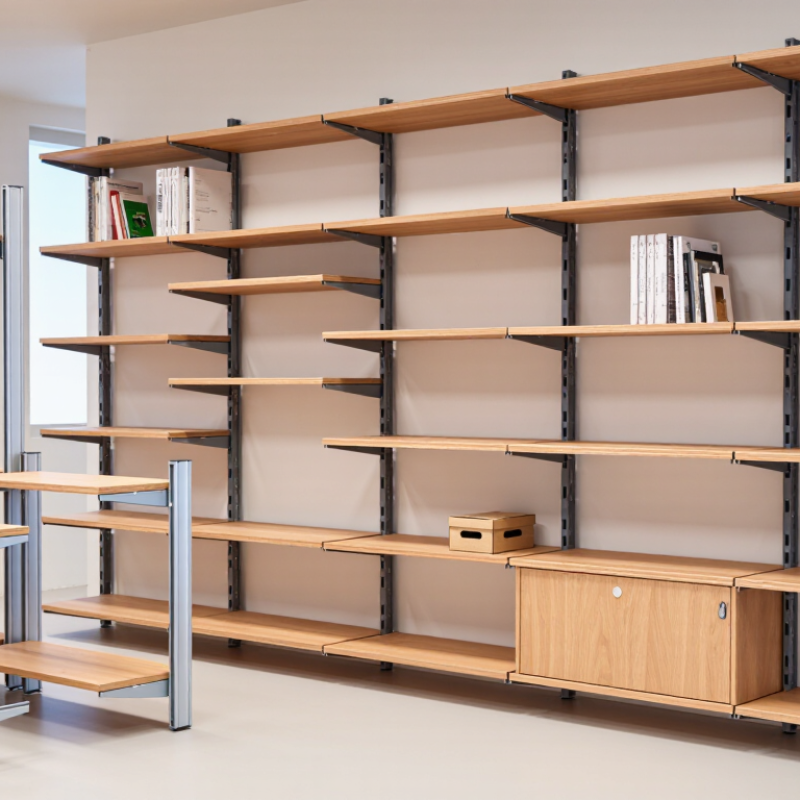
Modular shelving systems are storage structures built from separate, interchangeable parts. These parts may include uprights, shelves, brackets, panels, and connectors. Unlike fixed shelving, they can be rearranged when room needs change. A shelf can move from 30 centimeters high to 45 centimeters without replacing the entire unit.
This flexibility suits homes, offices, workshops, and stockrooms. For example, a workshop may need low shelves for tool cases and taller spaces for packaged materials. Modular components allow both arrangements within one frame. They also make it easier to use awkward corners, narrow walls, and changing floor plans. In practical installations, careful measuring matters. A few centimeters can affect door clearance or walking space.
The main advantages include easier expansion, simpler repairs, and better long-term value. If one shelf bends, the damaged part may be replaced instead of discarding the full structure. Adjustable levels can also reduce wasted vertical space. Still, modular shelving is not automatically perfect. Loose connections may cause wobbling, and heavy loads require suitable materials and secure anchoring. I have found that quick assembly can encourage careless weight placement. That is a design weakness worth considering. Clear load ratings, level flooring, and regular inspections improve reliability. A flexible system works best when its layout reflects real daily use, not just an attractive showroom arrangement.
Modular shelving systems work through interchangeable parts: uprights, beams, brackets, shelves, and connectors. Each component fits a planned grid, allowing users to change shelf height without replacing the entire unit. A warehouse team can store cartons today, then create taller bays for equipment tomorrow. That flexibility is the main advantage.
Design begins with the load requirement. Engineers calculate the weight per shelf, total bay capacity, span length, and floor condition. Workers then assemble the frame, secure connections, and check level alignment. In practice, a small error matters. An uneven floor can transfer weight unevenly, even when the shelves look stable. OSHA’s Materials Handling and Storage guidance emphasizes safe stacking, stable storage, and keeping aisles clear.
The system also supports gradual expansion. Extra shelves or sections can be added when inventory grows, reducing disruptive reconstruction. MHI’s 2024 Annual Industry Report found that 55% of supply-chain professionals expected to adopt robotics and automation within one to two years. Modular shelving can support that transition by creating consistent storage locations for scanners, carts, or automated equipment. However, flexibility is not unlimited. A shelf designed for light cartons should not hold dense machinery without a new capacity review. The practical lesson is simple: reconfiguration is easy, but assumptions about strength are not.
| Dimension | Typical System Characteristic | How It Works | Practical Advantage |
|---|---|---|---|
| Modular construction | Separate uprights, shelves, brackets, panels, and connectors | Individual components connect to form a complete storage unit rather than one fixed cabinet. | Parts can be added, removed, or replaced without changing the entire system. |
| Shelf adjustment | Shelf levels commonly adjust in small vertical increments, often about 25–50 mm, depending on the design | Shelf supports lock into pre-spaced slots, holes, or rails on the uprights. | Storage space can be matched more closely to the height of books, boxes, tools, or equipment. |
| Common shelf dimensions | Typical planning widths are approximately 600–1,200 mm; common depths are approximately 300–600 mm | Users select compatible shelf panels and frames based on available floor space and load requirements. | Different sizes can be combined to use walls, corners, alcoves, and other irregular areas efficiently. |
| Reconfiguration | Layout can be changed by relocating shelves, adding bays, or removing accessories | The system uses repeatable connection points and compatible modules. | It can adapt when inventory, room layout, or storage needs change. |
| Load capacity | Capacity varies by material, shelf span, depth, support spacing, and fixing method; it must be checked from the product specification | Loads transfer from the shelf surface to brackets or beams, then through the uprights and feet to the floor. | The system can be configured for light, medium, or heavy storage when correctly specified. |
| Assembly method | Many systems use boltless clips, hook-in brackets, bolts, or locking connectors | Components are aligned and secured at predetermined connection points; some designs require wall or floor anchoring. | Installation can be faster and less disruptive than constructing permanent built-in shelving. |
| Space efficiency | Vertical levels can be added within the available ceiling height, subject to stability and access requirements | Adjustable shelves reduce unused vertical gaps between stored items. | More usable storage volume can be created without increasing the floor footprint. |
| Scalability | Additional bays, shelves, dividers, drawers, bins, or panels may be added when compatible | New modules attach to the existing framework or are assembled as matching sections. | Storage capacity can grow progressively instead of requiring a complete replacement. |
| Material options | Common materials include powder-coated steel, stainless steel, aluminum, solid wood, and engineered wood | The material and finish are selected according to load, moisture, corrosion, hygiene, and appearance requirements. | One modular concept can serve homes, offices, workshops, archives, retail areas, and storage rooms. |
| Maintenance and repair | Worn shelves, clips, feet, dividers, or fasteners can often be replaced separately | The component-based design allows inspection and replacement of individual parts. | Maintenance can be targeted at the affected part, reducing material waste and downtime. |
| Safety and stability | Proper leveling, even load distribution, and anchoring may be required, especially for tall or heavily loaded units | Feet, braces, back panels, wall anchors, and approved connectors help resist movement and tipping. | Correct installation improves stability and supports safer everyday use; manufacturer load and anchoring instructions should always be followed. |
Note: Dimensions and adjustment intervals are common planning ranges, not universal specifications. Actual load limits, compatible components, and anchoring requirements depend on the specific shelving design and installation conditions.
Modular shelving systems are valuable because they adapt to changing spaces and storage needs. A fixed unit may fit today, but a growing archive can quickly outgrow it. Modular components let users add shelves, uprights, and drawers without replacing the entire structure. That matters. In a small storeroom, an adjustable shelf can hold tall cartons one month and shallow bins the next. The same flexibility supports home offices, workshops, retail rooms, and records areas.
Their second major advantage is efficient use of vertical space. Shelves can be positioned around actual item sizes, reducing awkward gaps and floor clutter. This can improve access when frequently used tools sit between waist and shoulder height. Clear labels and consistent shelf spacing also make stock checks faster. From practical installation experience, lighter sections are easier to move through narrow doors and reconfigure after a layout change. It feels orderly, though convenience depends on careful planning.
Modular shelving can also reduce long-term cost and material waste. Damaged parts may be replaced individually, while usable frames remain in service. However, the system is not automatically safe or economical. Users should check load ratings, wall conditions, connector quality, and anti-tip requirements before installation. Uneven floors can create surprising movement. I have seen overloaded shelves bend slightly, making access harder and creating avoidable risks. A measured layout, sensible weight distribution, and periodic inspections provide more dependable performance than appearance alone.
Modular shelving systems are especially useful where space, storage needs, or room functions change frequently. In homes, they work well in kitchens, bedrooms, entryways, and home offices. A shelf can hold books today and storage baskets tomorrow. Adjustable levels also help fit tall boots, folded linens, or small appliances without wasting vertical space.
Small offices benefit from modular shelving because teams often expand, relocate, or reorganize. Shelving can separate work zones without building permanent walls. In my experience, open units make frequently used files easy to reach, while closed boxes reduce visual clutter. However, this arrangement needs discipline. Untidy shelves can make a professional room feel crowded within days.
Retail stores, libraries, studios, and workshops can also gain practical value. Retail displays may change with seasons or inventory sizes. Libraries need flexible sections for different collections. Workshops often require strong shelves for tools, materials, and labeled containers.
A careful assessment should consider wall strength, floor balance, load limits, and safe access. It is not only about appearance.
Rental homes and compact apartments may benefit most. Freestanding modules can adapt without major construction, although they still need proper anchoring where required. A narrow unit beside a desk can use an ignored corner. In a child’s room, lower shelves provide reachable storage, but heavier items should remain low. Modular shelving is flexible, yet it cannot solve poor planning. The system may be adjustable, but the habits around it are not.
Choosing a modular shelving system starts with the room, not the catalogue. Measure ceiling height, aisle width, floor load, and access points. A 300-millimetre error can make a neat layout unusable. Modular shelves offer adjustable levels, easier repairs, and future expansion without replacing the entire structure.
Workload should guide the frame and deck material. For paper files, lightweight steel may be sufficient. For boxed parts, reinforced shelves and clear load labels are safer. The 2024 MHI Annual Industry Report found that 55% of supply-chain professionals planned to adopt robotics or automation within one to two years. This suggests selecting shelves that can support scanners, mobile equipment, or later workflow changes. However, automation readiness should not become an excuse for overbuying.
Think about people, too. Can staff reach the highest shelf without stretching? Can a loaded trolley turn without striking a corner? The 2023 Warehousing Vision Study reported that 58% of warehouse decision-makers expected to deploy automation by 2028. Compatibility matters, but human movement remains decisive. Check assembly time, corrosion resistance, cleaning needs, and spare-part availability. A low purchase price may hide difficult installation costs. I have seen attractive systems fail because adjustment tools were missing. That detail is easy to dismiss, yet it affects daily reliability. Review the layout after real use; the first plan is rarely perfect.
They use interchangeable uprights, beams, brackets, shelves, and connectors. Each part fits a planned grid. Users can change shelf heights without replacing the whole unit. A bay might hold cartons today and taller equipment tomorrow. That is the useful part.
Check shelf loads, total bay capacity, span length, and floor condition. Workers should assemble the frame securely and confirm level alignment. A slightly uneven floor can shift weight unexpectedly. The shelves may look stable. Looks can mislead.
Modular shelving adapts to changing rooms and storage needs. Users can add shelves, uprights, or drawers instead of buying a new unit. It also uses vertical space more efficiently. Tall cartons and shallow bins can share one structure. Small changes matter.
It may reduce costs because individual damaged parts can be replaced. The remaining frame can stay in service. This approach may also reduce material waste. However, cheap parts or poor planning can create later expenses. The savings are not automatic.
Homes, offices, workshops, studios, libraries, and retail rooms can benefit. Rental homes and compact apartments often gain the most flexibility. A narrow unit can fill an unused corner beside a desk. Offices can separate work zones without permanent walls. Space becomes more useful.
Adjustable levels can match books, boots, baskets, tools, or appliances. Frequently used items should sit near waist or shoulder height. Labels and consistent spacing can make stock checks faster. Open shelves improve access, while closed boxes hide visual clutter. Untidy shelves still feel crowded.
Not always. A shelf designed for light cartons should not hold dense machinery automatically. Review the load rating before changing the storage purpose. Distribute weight evenly and keep heavier items lower when possible. Strength assumptions need checking.
Some units require anchoring, especially in areas with children or frequent movement. Check wall strength, connectors, floor balance, and anti-tip needs. Inspect bent shelves, loose fittings, and unusual movement periodically. A stable appearance does not prove safe performance. I would inspect more often than necessary.
Modular shelving systems are flexible storage solutions made from interchangeable components such as shelves, supports, brackets, and connectors. These parts can be assembled, adjusted, expanded, or rearranged without replacing the entire unit. Their adaptable design allows users to create layouts that match changing storage needs, available floor space, and different item sizes. When asking “what are the advantages of modular shelving systems,” the main benefits include versatility, efficient space utilization, easy installation, long-term adaptability, and the ability to repair or upgrade individual parts.
Modular shelving can improve organization in homes, offices, retail areas, workshops, libraries, and storage rooms. It is especially useful in spaces that may change over time or require customized configurations. When choosing a system, consider its load capacity, material quality, dimensions, adjustability, assembly method, safety features, appearance, and budget. A well-selected modular shelving system can keep items accessible, make better use of vertical space, and provide a practical storage solution that evolves with future needs.

Boksera Shelving