Understanding what safety standards apply to warehouse storage systems requires more than checking a rack supplier’s brochure. It requires examining the entire storage environment, from floor anchors to forklift routes. In the United States, OSHA rules address safe material handling, stable storage, clear aisles, and protection from falling materials. ANSI/RMI MH16.1 provides engineering guidance for industrial steel storage racks. Local building, fire, and seismic codes may add further requirements.
As rack-safety specialist Chris Harris explains, “A rack system is only as safe as its design, installation, inspection, and use.” This practical observation matters. A beam may appear straight while its connector is damaged. A pallet may fit neatly while exceeding the posted load limit. Small failures can become serious quickly.
A reliable safety review should confirm manufacturer specifications, load plaques, floor conditions, rack protection, and documented inspections. Qualified personnel should evaluate impact damage, missing anchors, bent uprights, and unauthorized modifications. Workers also need clear training on loading patterns, forklift speeds, and emergency reporting.
The answer is not one universal rule.
Standards differ by location and system type. Automated storage systems, mobile racks, and high-seismic facilities may require additional engineering review. Even experienced teams can overlook changing risks after layout revisions or new equipment arrives. That weakness deserves honest attention.
This guide will explain the main standards, responsibilities, inspection practices, and common gaps affecting warehouse storage safety. It will also show how managers can turn technical requirements into visible daily controls, such as labeled bays, protected corners, and promptly isolated damaged racks.
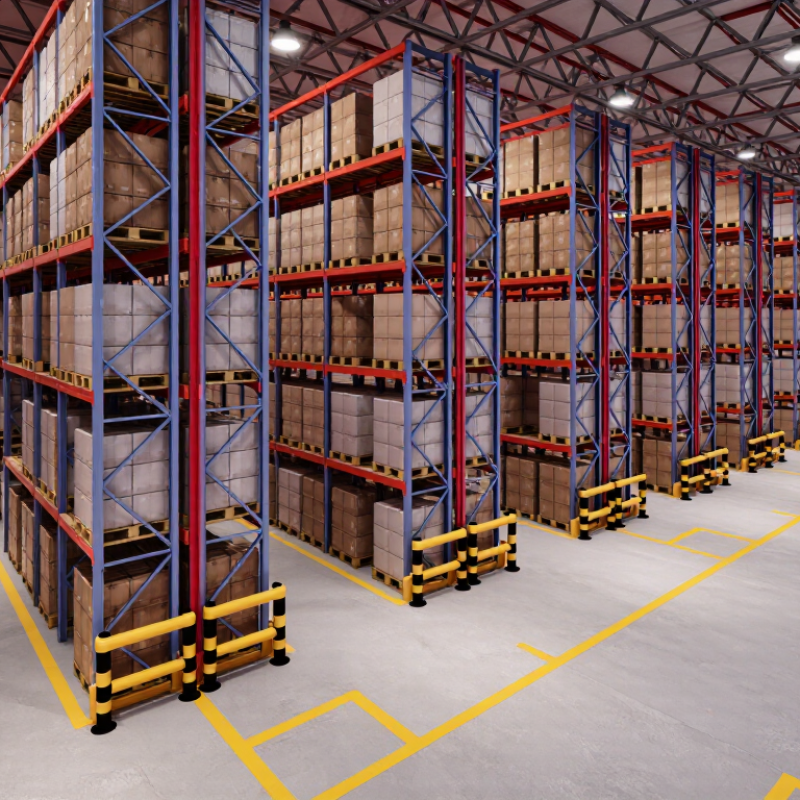
Warehouse storage safety starts with sound design, correct installation, and routine inspection. In the United States, OSHA’s 29 CFR 1910.176(b) requires stored materials to remain stable and secure. For pallet racks, ANSI MH16.1 sets engineering requirements for the design and testing of industrial steel storage racks. Loads should match the rack’s posted capacity; pallets should sit squarely on beams, not hang over damaged or uneven supports. Small details matter. A bent upright can be easy to miss.
Safe operation also depends on trained equipment operators and clear reporting procedures. OSHA’s 29 CFR 1910.178 covers powered industrial trucks, including operator training and evaluation. The European standard EN 15635 addresses the use and maintenance of steel static storage systems, including damage reporting and inspections by competent personnel. These standards offer practical controls, but paperwork alone will not protect a rack hit by a forklift. The U.S. Bureau of Labor Statistics reported a 4.8 recordable injury and illness rate per 100 full-time workers in warehousing and storage for 2023, compared with 2.4 across private industry. That gap deserves attention. Mark damaged uprights, isolate affected bays, and document repairs before loading them again. A weekly walk-through helps, though it can still miss hidden damage.
Warehouse rack safety depends on more than the weight printed on a beam label. In the United States, OSHA’s 29 CFR 1910.176(b) requires stored materials not to create hazards, while ANSI MH16.1 sets design and testing criteria for steel storage racks. The 2022 Bureau of Labor Statistics injury report recorded 5.5 cases per 100 full-time workers in warehousing and storage. That figure covers many hazards, not rack failures alone, but it underlines why capacity and layout deserve routine attention.
A rack’s rated capacity depends on its exact configuration, including beam spans, upright frames, bracing, and load distribution. A pallet placed off-center can concentrate force; a forklift impact can weaken an upright before anyone notices. Design reviews should also consider floor-slab capacity, anchors, seismic conditions, and changes in stored goods. A posted rating is useful only when the installed rack matches the design. This is easy to overlook. Small details matter.
Tips: Keep load signs visible and match them to the actual rack layout. Report bent uprights or loose anchors promptly; do not straighten or modify components without qualified engineering review. Check that pallets sit evenly on beams, with no overhang or concentrated loads. A neat aisle is not proof of a safe rack.
Applicable requirements depend on the country, local building code, facility conditions, and storage-system type. Confirm the governing editions and site-specific design requirements with a qualified professional. Capacity values must come from the design documentation for the actual rack configuration; there is no single universal safe load limit.
| Standard or Requirement | Main Safety Focus | How Load Capacity and Structural Design Matter | Practical Warehouse Check |
|---|---|---|---|
| OSHA 29 CFR 1910.176(b), United States | Safe material storage and prevention of sliding or collapse. | Stored materials must be stable and secure. Stacking height, load arrangement, and support conditions should not create an unstable stack or overload storage components. | Check that loads are stable, properly supported, and not stacked beyond the safe arrangement for the materials and storage method. |
| ANSI MH16.1, Specification for the Design, Testing and Utilization of Industrial Steel Storage Racks | Structural design and evaluation of industrial steel storage racks. | Rack capacity depends on the complete configuration, including beam and upright components, connection details, bay geometry, bracing, and applied loads. Changing a component or layout can change capacity. | Verify that installed components and rack configuration match the approved design and its stated load ratings. |
| EN 15512, Steel static storage systems — Adjustable pallet racking systems — Principles for structural design (Europe) | Structural design principles for adjustable pallet racking. | Design considers the rack structure and the actions applied to it. Capacity is specific to the system design and loading arrangement rather than a generic rating for all racks. | Use design calculations or approved technical documentation that reflects the actual rack layout, loads, and operating conditions. |
| EN 15620, Steel static storage systems — Tolerances, deformations and clearances (Europe) | Installation tolerances, structural deformations, and operating clearances. | Alignment, deflection, and clearance affect how loads are supported and handled. Conditions outside specified limits can reduce safe operation or cause interference with handling equipment. | Check rack alignment, clearances, and visible deflection against the applicable design and installation criteria. |
| EN 15629, Steel static storage systems — Specification of storage equipment (Europe) | Specification of storage equipment and relevant operating information. | Clear equipment specifications help ensure the selected system is suitable for the intended loads, goods, handling equipment, and operating environment. | Confirm that the system specification matches the intended unit loads, pallet dimensions, handling method, and site conditions. |
| EN 15635, Steel static storage systems — Application and maintenance of storage equipment (Europe) | Safe use, inspection, damage management, and maintenance of storage equipment. | Impact damage, altered components, or unapproved repairs can reduce the load-bearing capacity of the structure and compromise stability. | Provide a process for reporting damage, restricting unsafe areas, arranging assessment, and documenting inspections and repairs. |
| Applicable building code and structural loading standard, such as ASCE/SEI 7 where adopted in the United States | Facility-specific design loads, including applicable seismic, wind, and other site loads. | Building location, anchorage, floor conditions, and lateral loads can affect rack stability and the design of the storage system and its connections. | Confirm local code requirements and verify that anchorage, supporting floor, and any required seismic design match the approved engineering documents. |
| Rated capacity information and approved configuration | Communication of the safe operating limits for the installed system. | Beam-level, bay, or system capacity can vary with beam type, span, upright frame, bracing, load distribution, and rack height. Ratings should not be transferred to a different configuration without verification. | Keep capacity information legible and consistent with the installed configuration. Do not exceed the documented ratings or modify the rack without appropriate review and approval. |
Warehouse storage safety depends on three linked controls: fall protection, collision prevention, and rack stability. OSHA’s 29 CFR 1910.28 generally requires fall protection at unprotected sides and edges four feet or higher in general industry. Elevated picking areas need guarded edges, secure gates, and safe access. A pallet is not a step.
Forklift impacts can bend rack uprights or loosen connections before damage looks severe. Marked travel lanes, protected rack columns, and low-speed turns reduce collision risks. OSHA 29 CFR 1910.176(b) requires stored materials to remain stable and secure against sliding or collapse. After an impact, isolate the affected bay and have a qualified person assess it. Don’t simply straighten a bent upright and reload it.
The Bureau of Labor Statistics’ 2022 Survey of Occupational Injuries and Illnesses reported 4.8 recordable cases per 100 full-time-equivalent workers in warehousing and storage, versus 2.7 across private industry. That gap makes routine checks more than paperwork. Inspect for leaning frames, missing locking pins, cracked welds, and overloaded beams; compare actual loads with posted capacities and the rack design. Keep inspection records. Still, a tidy checklist can miss damage hidden behind stored cartons, so workers need a clear way to report near-misses and impacts.
Warehouse storage systems require more than strong frames and clear labels. Safety depends on regular inspection, disciplined maintenance, and consistent operating procedures. Requirements may differ by location, but recognized workplace safety standards usually address load capacity, structural condition, access, and emergency planning.
A trained person should inspect racks, shelves, anchors, beams, and floor connections at scheduled intervals. Look for bent uprights, missing pins, loose bolts, damaged guards, and overloaded levels. Record each finding with its location and severity. Remove damaged components from service until a qualified professional evaluates them. Small defects can become serious quickly.
Keep aisles clear. Operators should travel slowly, maintain visibility, and place loads evenly across storage levels. Forklift users need appropriate training and must follow posted capacity limits.
Maintenance teams should replace damaged parts with approved components, not improvised materials. Written procedures should explain loading, unloading, reporting, and emergency actions in simple language.
I have seen inspections become paperwork exercises. That approach fails. Walk the actual floor, speak with operators, and compare conditions with the latest inspection record. Stop and reassess when layouts change, heavier goods arrive, or equipment behaves differently. A checklist helps, but it cannot replace judgment. Safety improves when people report near misses without fear and supervisors respond before damage becomes an incident.
Warehouse storage safety depends on more than strong frames and tidy aisles. Workers need training before operating near racks, shelving, forklifts, or loading zones. Training should cover load limits, safe stacking, damaged components, falling-object risks, and emergency routes. Use real examples, such as a bent upright or a pallet leaning three inches. Short demonstrations often reveal gaps that written instructions hide. Keep it practical.
Supervisors should inspect storage systems regularly and act when hazards appear. Their duties may include controlling access, reporting defects, arranging repairs, and confirming that loads match the system’s rated capacity. Workers must know whom to notify and when to stop work. No guesswork. Refresher training matters after an incident, equipment change, layout revision, or long absence. Local workplace rules and recognized engineering standards should guide the inspection schedule.
Safety documentation creates evidence of responsible management.
Maintain training records, inspection dates, corrective actions, repair approvals, and updated layout drawings. Each record should identify the location, defect, risk level, responsible person, and completion date. A photograph beside a damaged beam can prevent confusion later.
Still, paperwork can create false confidence. A complete form does not prove a safe rack. Some inspections are rushed, and that weakness deserves honest review. Supervisors should compare records with conditions on the floor, including blocked aisles, missing labels, and overloaded pallets. Clear documents support accountability, but informed decisions protect people.
Capacity depends on the installed design, including beam spans, upright frames, bracing, and load placement. A posted rating may not match a changed layout.
An off-center pallet can concentrate force on one part of a beam. Keep pallets level, fully supported, and free from overhang.
Report bent uprights, loose anchors, missing pins, damaged guards, and loose bolts. Small defects can grow. Don’t straighten parts yourself.
Set a regular schedule with a trained inspector. Recheck after layout changes, heavier goods, impacts, or unusual equipment behavior.
Note the location, defect, severity, responsible person, and repair date. A clear photo of a bent beam can help prevent confusion.
Travel slowly, keep a clear view, and place loads evenly. Training should use real examples, like a leaning pallet or dented upright.
Remove it from service until a qualified professional evaluates it. Replace parts with approved components, not improvised materials.
No. Compare inspection forms with actual floor conditions, including blocked aisles and overloaded levels. Forms can look complete while problems remain.
What safety standards apply to warehouse storage systems? Safe storage begins with choosing systems designed for their intended loads, layout, and operating conditions. Clear capacity limits, sound structural design, secure anchoring, and suitable aisle spacing help prevent overloading and instability. Protection such as guardrails, column barriers, and measures to reduce falling-object risks can also limit harm from collisions and system failure.
Safety depends on ongoing care as well as sound design. Regular inspections should identify damage, loose connections, overloading, or changes that could affect stability, and maintenance should address problems promptly. Safe operating procedures should cover loading, unloading, equipment movement, and reporting hazards. Worker training, clear safety responsibilities, and accurate records of capacities, inspections, repairs, and training help support consistent compliance and safer warehouse operations.

Boksera Shelving