Engineered storage systems designed for high scalability, structural integrity, and optimized throughput across logistics networks.
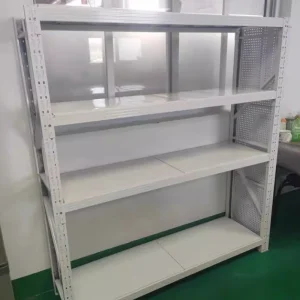
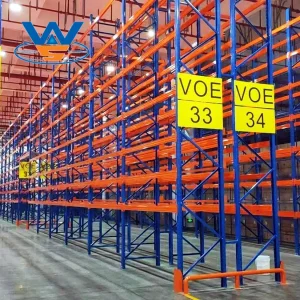
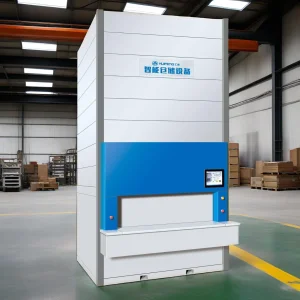
Engineered solutions, advanced metallurgy, and strict QA protocols that guarantee system stability and operational safety.
Dongguan Boksera Shelving Co., Ltd. is a professional manufacturer and supplier specializing in heavy-duty warehouse storage racking and industrial shelving solutions. With a strong commitment to quality, innovation, and customer satisfaction, Boksera designs and produces reliable storage systems that help businesses maximize warehouse space, improve inventory management, and enhance operational efficiency.
The company offers a wide range of storage solutions, including pallet racking systems, industrial shelving, and customized warehouse storage configurations tailored to meet the diverse needs of logistics centers, manufacturing facilities, retail distribution hubs, and e-commerce warehouses. Each product is engineered with durability and load-bearing performance in mind, ensuring safe and stable storage for various types of goods.
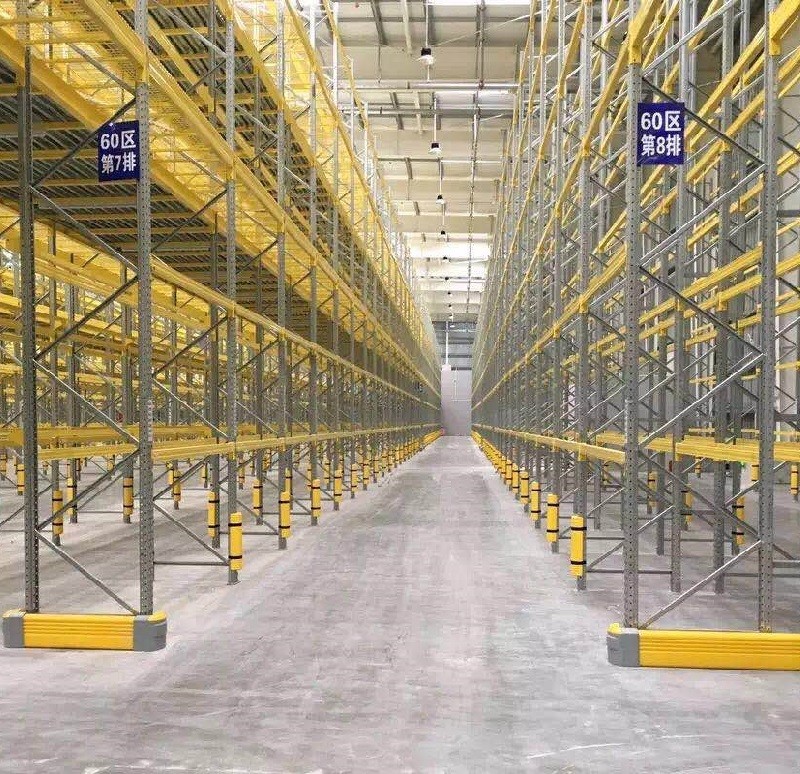
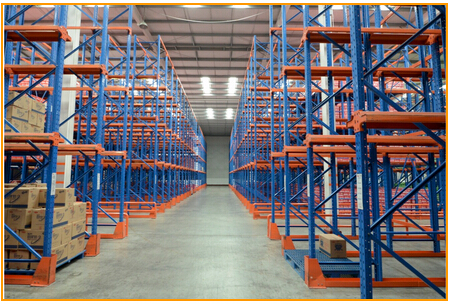
Backed by advanced manufacturing equipment and a skilled technical team, Boksera maintains strict quality control standards throughout the production process. The company is dedicated to delivering cost-effective solutions without compromising on performance or safety. In addition, Boksera provides professional consultation, layout design support, and after-sales service to ensure a seamless customer experience.
With growing international demand, Dongguan Boksera Shelving Co., Ltd. continues to expand its global presence, aiming to become a trusted partner for efficient, scalable, and high-quality warehouse storage solutions worldwide.
Navigating supply chain disruptions, escalating land costs, and the rapid shift to automated, vertical fulfillment frameworks.
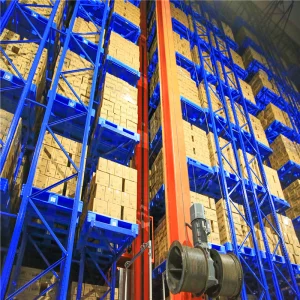
Urban logistics centers face unprecedented price increases per square foot. Traditional low-rise storage models are financially unsustainable. Modern warehouses must utilize systems rising from 12 to over 40 meters, necessitating tight tolerance structural uprights and seismic calculation accuracy.
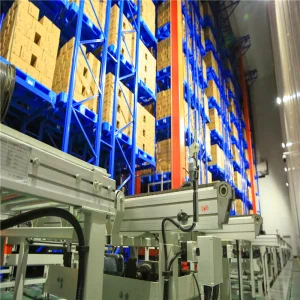
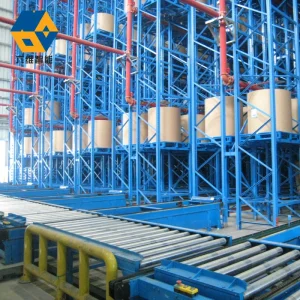
Human labor costs and recruiting challenges have expedited the deployment of Automated Storage and Retrieval Systems (AS/RS), automated guided vehicles (AGVs), and high-density radio shuttle racks. Structural systems must match sub-millimeter tolerances to ensure sensor-guided machines never experience physical collisions or load misalignments.
Global regulatory bodies like the Rack Manufacturers Institute (RMI) in North America and FEM guidelines in Europe require detailed testing under dynamic, wind, and seismic load scenarios. Advanced finite element analysis (FEA) is now mandatory for high-density, multi-tier industrial racking.
Why leading global distributors and high-velocity logistics hubs source critical pallet infrastructure from top-tier Chinese manufacturers.
The global dominance of China-based racking exporters is built on vertical supply chain integration, advanced metallurgy, and heavy investment in automated precision fabrication. Factories in clusters like Jiangsu and Guangdong (including Dongguan Boksera Shelving Co., Ltd.) possess a key raw material advantage: immediate access to high-yield Q235B and Q355B structural steel. This steel is hot-rolled and cold-formed on-site under strict chemical composure audits, ensuring consistent structural ductility, high elasticity, and extreme load capacity limits.
Furthermore, the integration of automated high-speed roll forming lines guarantees that complex profile geometries for upright frames are executed with dimensional deviation limits of less than 0.5mm per 10 meters of height. This tolerance level is vital for the seamless performance of shuttle carts and AS/RS stacker cranes. Advanced multi-stage pre-treatment tunnels, followed by high-adhesion electrostatic powder coating, protect the steel against corrosion, mechanical wear, and chemical exposure in harsh industrial environments.
| Feature Parameter | Standard Market Offerings | Top China Factory Standards (Boksera Level) | Operational Impact |
|---|---|---|---|
| Steel Grade & Source | Recycled / Low-yield Steel Grades | Certified Q235B / Q355B Structural Carbon Steel | Ensures high load limits and prevents permanent deformation under heavy load. |
| Fabrication Tolerances | ±1.5mm to ±2.0mm deflection range | Strictly < ±0.5mm structural deviation limits | Crucial for automated AS/RS stacker crane pathways and high-speed robotic integration. |
| Surface Protection | Single-pass liquid paint / thin coating | Multi-stage chemical pre-wash & electrostatic thermosetting powder coating (60-90μm) | Corrosion resistance in sub-zero cold rooms (-30°C) and humid chemical depots. |
| Design Certification | Generic regional load estimations | FEA simulated modeling compliant with FEM 10.2.02, RMI, & AS4084 | Seamless customs clearance, regulatory compliance, and workplace safety compliance. |
Customized configurations optimized for specific thermal, chemical, and speed demands across global supply chains.
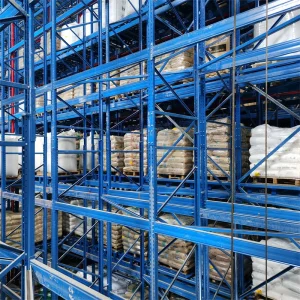
Operating in environments down to -30°C demands structural steel that remains ductile and avoids low-temperature embrittlement. Solutions like drive-in racking and high-density radio shuttle racks are paired with specialized epoxy-powder finishes to prevent moisture condensation and dynamic rack failure.
E-commerce operations depend on micro-pick accuracy, high vertical space utilization, and rapid cycle rates. Multilevel picking platforms, mezzanine systems, and high-density selective pallet racking optimize bin and carton routing, increasing picking throughput by up to 40%.
Industrial chemical warehouses require corrosion-resistant coatings, strict fire-suppression flue spaces within the racking grid, and integrated spill containment options. Storing round tin cans and heavy metal drums requires contoured pallet support bars, safety netting, and anti-collapse backstops.
How the next generation of pallet handling systems reduces environmental impact while maximizing warehouse speed.
Global procurement teams prioritize vendors utilizing green manufacturing processes. Top Chinese suppliers are adopting electric arc furnace (EAF) steel and scrap-recycled alloy matrices to lower the embedded carbon footprint of steel uprights and beams.
Modern structural designs incorporate IoT strain gauges and accelerometer arrays into critical racking columns. These sensors record deflection data, shock impacts from forklifts, and structural load distributions, reporting telemetry back to the WMS in real time.
Rigid, single-purpose installations are being replaced by modular, boltless assembly designs. Adjustable beam connectors and standardized structural parts allow distribution centers to alter layout configurations to accommodate changing packaging shapes without replacing the racking foundation.
Answering critical engineering, compliance, and custom design inquiries from logistics procurement directors.
We primarily utilize high-tensile Q235B and Q355B structural carbon steel. Q235B is comparable to ASTM A36, providing excellent weldability and structural stability for standard loads. Q355B is comparable to ASTM A572, offering a higher yield strength (355 MPa) suitable for high-density, multi-tier racking systems and AS/RS components that carry heavy unit loads.
All structural designs undergo rigorous finite element analysis (FEA) to confirm they meet global standards, including the North American RMI (Rack Manufacturers Institute) code, European FEM 10.2.02 guidelines, and Australian AS4084 standards. We tailor calculations to account for local environmental factors, such as wind exposure and seismic risk zones (seismic categories A through F).
Our automated electrostatic powder coating process applies dry thermosetting resin to clean steel surfaces, resulting in a thickness of 60 to 90 microns. It is baked at high temperatures to form a durable finish. This coat offers superior resistance to impacts, chemicals, and scratches, and is suitable for operation in temperature-controlled warehouses, clean rooms, and outdoor environments.
Under international standards, the allowable elastic deflection limit of a beam is L/200, where "L" represents the clear span distance of the beam. For a typical 2700mm beam, the maximum allowable deflection at full load is 13.5mm. Exceeding this value suggests overloading, poor design, or material fatigue, which must be addressed to prevent failure.
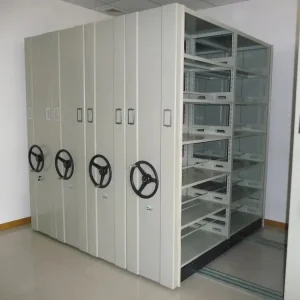
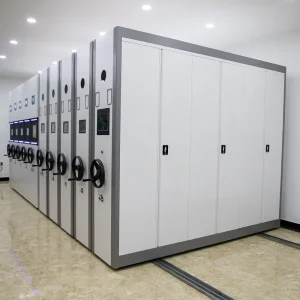
Yes. Our cold storage systems feature specialized low-alloy steel that retains its impact toughness at temperatures down to -30°C. High-density designs, such as radio shuttle racking, double-deep selective racking, and mobile bases, are utilized to minimize energy consumption by optimizing the volume of refrigerated air space.
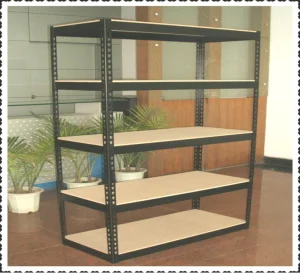
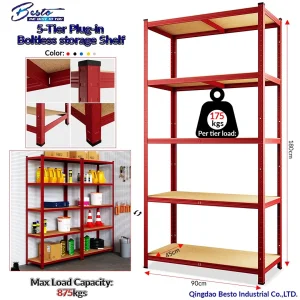
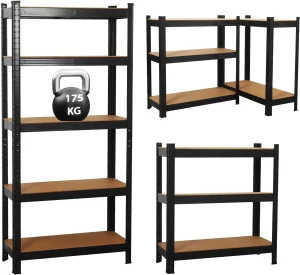
Boltless rivet designs, like those in our light-duty and medium-duty shelving range, allow for rapid assembly and adjustment without tools. Users can adjust shelf levels in increments of 50mm or 75mm. This design lowers installation labor costs by up to 50% compared to traditional nut-and-bolt systems.
We recommend installing heavy-duty upright column guards at corner bays, pallet backstops to prevent over-travel, and wire mesh decking to support damaged pallets. In high-traffic zones, horizontal portal ties and cross-aisle bracing are critical to distribute dynamic stresses from forklift impacts.
Standard custom orders take between 20 to 30 days from layout approval to container loading. This window includes manufacturing, multi-step quality control audits, powder curing, and export packaging (using steel strapping and moisture-barrier film wrapping) to ensure damage-free maritime transit.
Complementary hardware engineered to support high-density logistics and industrial operations.
 Boksera Shelving